

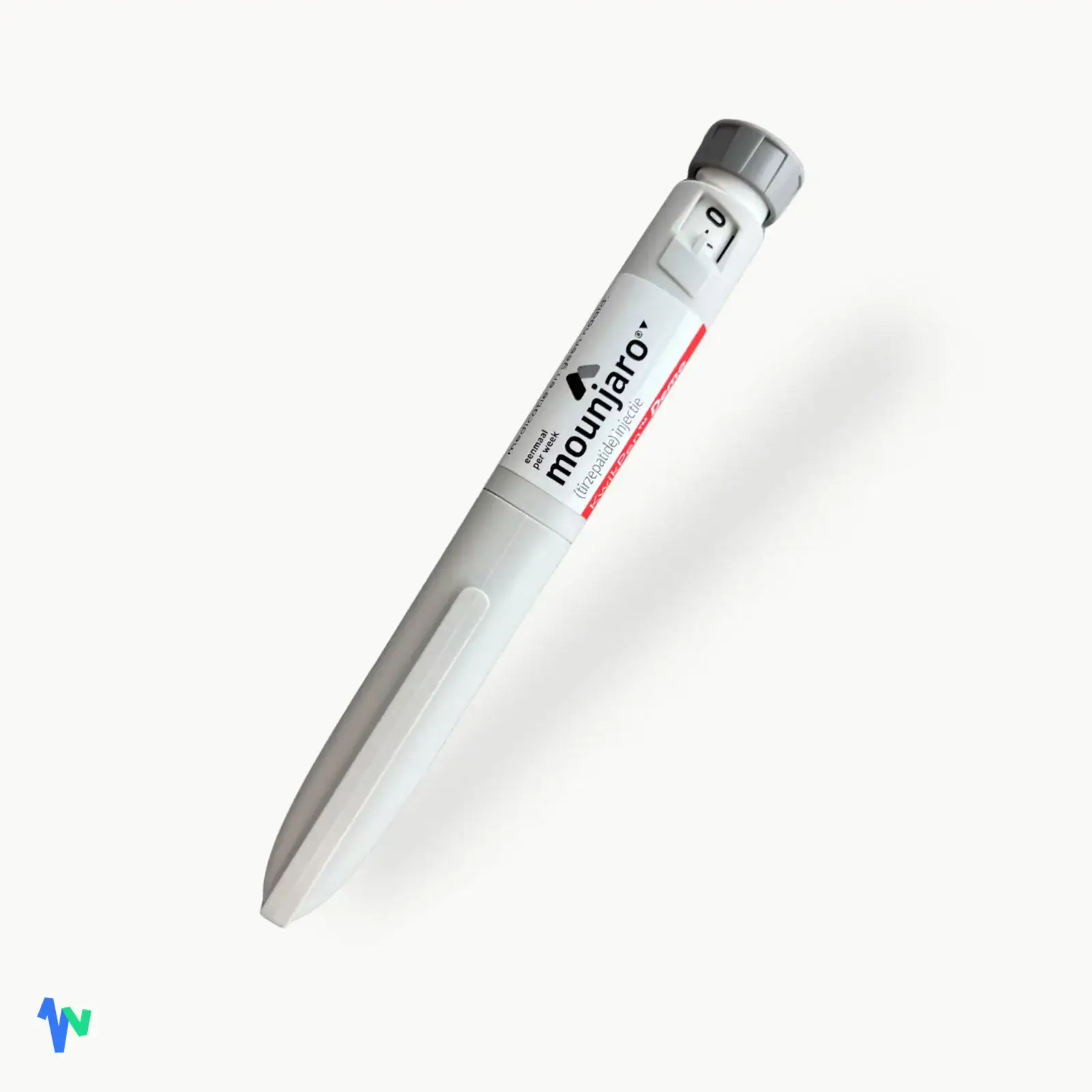
Proven to be most effective
Everything you need to know about losing weight with Mounjaro
Tirzepatide · Once a week
Mounjaro is a prescription-only treatment containing tirzepatide for weight management. Tirzepatide activates both GIP and GLP-1 receptors and can reduce appetite and food intake. A doctor will always assess first whether the treatment is medically suitable for you.
That’s why you choose WeightConsult
A positive BMI check does not constitute medical approval.
Tirzepatide
What is Mounjaro?
Mounjaro is a medicine containing tirzepatide as the active substance. It is authorised in the EU for weight management in adults who are obese, or who are overweight and have at least one weight-related condition, in addition to a calorie-restricted diet and increased physical activity.
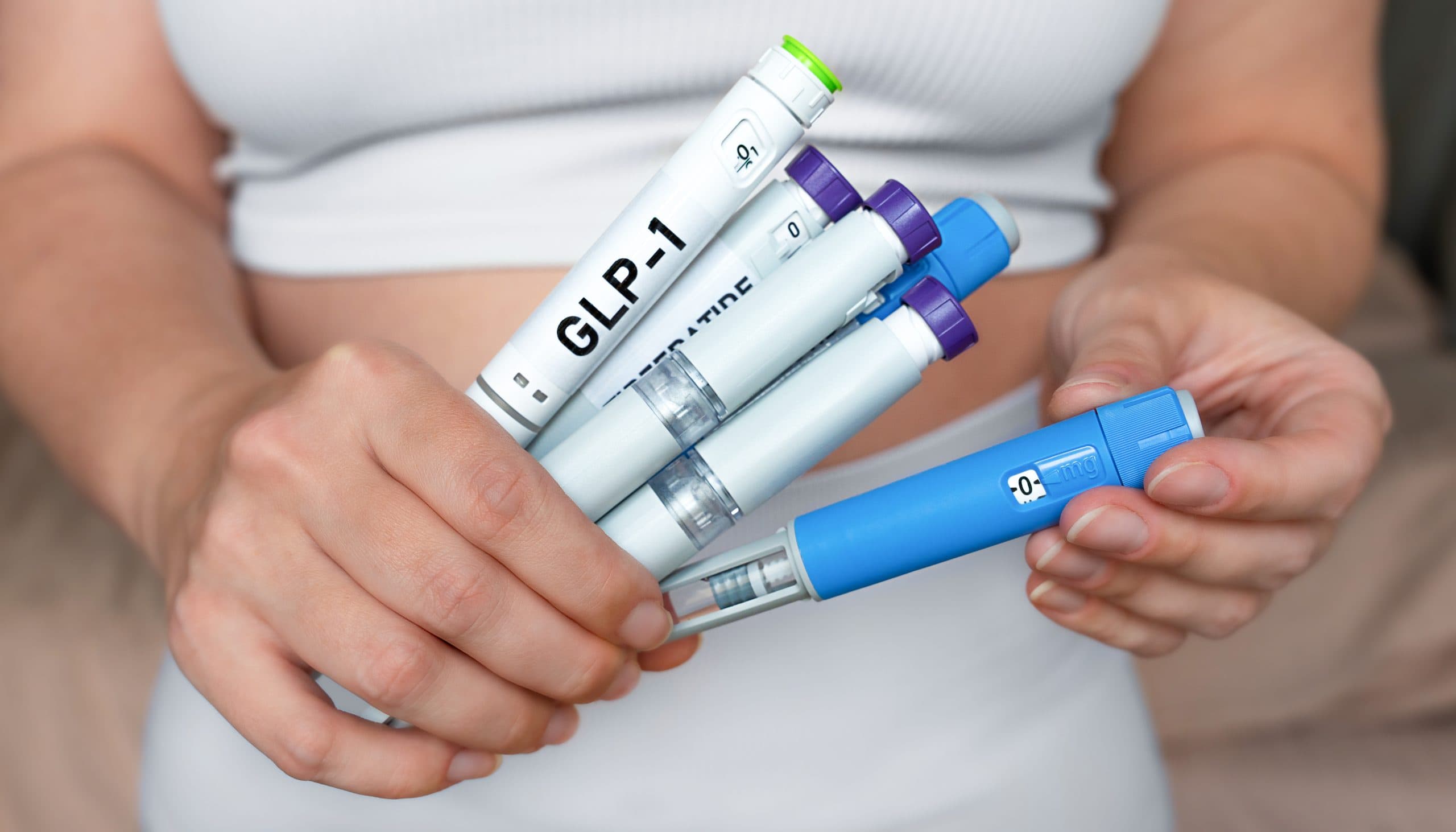
Tirzepatide belongs to the class of GLP-1 receptor agonists. GLP-1 is a hormone produced naturally by the body that is involved in, amongst other things, appetite, food intake and satiety. The injectable form of Mounjaro is administered subcutaneously once a week. The treating doctor determines the appropriate dose and dosing schedule.
Dosage & composition
Mounjaro is being built up step by step
Mounjaro is taken once a week. The usual starting dose is 2.5 mg once a week. After four weeks, this is increased to 5 mg. Further increases are made, where appropriate, in increments of 2.5 mg and only after at least four weeks on the current dose.
Instructions for use
How do you use Mounjaro?
Mounjaro is administered subcutaneously once a week. Suitable injection sites are the abdomen, thigh or upper arm. Use the pen exactly as described in the patient information leaflet and as instructed by your doctor, nurse or pharmacist.
Check the pin
Check that you have the correct pen and strength, and that the solution looks normal.
Choose the injection site
Use your abdomen, thigh or upper arm, and alternate the injection site regularly.
Administer the dose
Insert a new needle, follow the necessary steps for the KwikPen and administer the full prescribed dose in accordance with the package leaflet.
Store correctly
Store Mounjaro in accordance with the current product information and avoid freezing or exposure to heat.
After placing your first order, you can book an appointment at a participating Vaccination Centre. There, a doctor or nurse can walk you through the injection technique step by step.
Other treatment options
Compare these slimming treatments too


During the initial consultation, the doctor will determine which treatment may be medically appropriate for your situation.
Why WeightConsult
Why do people choose us?
We support people who wish to lose weight in a medically sound way. Every application is assessed on a case-by-case basis, and the programme remains focused on your health, progress and lifestyle.

Dutch doctors registered with the BIG
Every application is assessed from a medical perspective, taking into account, amongst other things, the applicant’s medical history and medication use.
First injection available with supervision
If you’d like some help with the technical side of things the first time round, you can book an appointment at a participating Vaccination Centre after placing your order.
Support via MijnWeightConsult
You can use the secure portal to stay in touch with our medical team and ask questions throughout the process.
Transparent communication
We are clear about the costs, side effects, expectations and limitations of the treatment.
Our team
Medical expertise with a personal touch
We assess and support applications on a personalised basis. Behind every treatment programme is a team of Dutch healthcare professionals.
Meet the whole team →

