


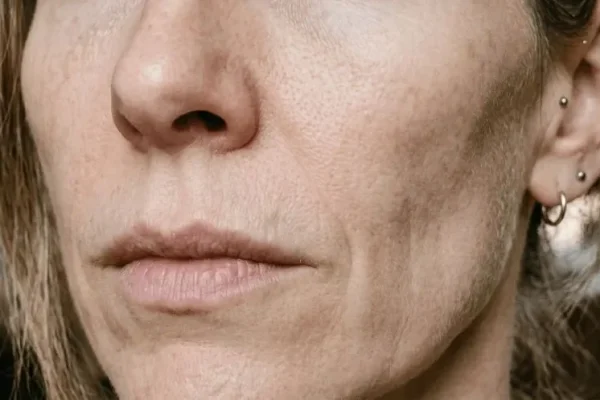
The term ‘Ozempic face’ is increasingly popping up in news reports and on social media. It usually refers to a slimmer body with a face that suddenly looks more tired, hollow or older. These images quickly evoke unease, especially when the change is directly attributed to the medication itself.
Behind that agitation, there is often a simpler medical explanation than the name suggests. It therefore helps to first get a clearer idea of exactly what the term describes, and exactly what it does not.
What the term does and does not mean
Ozempic face is not an official diagnosis, but a popular term for volume loss in the face after rapid weight loss. That loss of fatty tissue can become visible in the cheeks, temples and jawline, also making lines around the mouth, nose and eyes more noticeable.
The confusion often starts with the name. The image does not belong exclusively to Ozempic, but can also occur at Wegovy, Mounjaro, a strict diet or after gastric bypass surgery. The focus is not on the drug itself, but on the speed and extent of weight loss, which includes fat loss in the face.
The term comes mainly from media and social media and thus says more about recognition than a separate medical condition. That very distinction is important to properly place the rest.
Who is more at risk and what affects recovery
Rate of weight loss, total weight loss, age and skin quality mainly determine how visible facial change becomes. Those who already naturally have less facial volume or thinner, less resilient skin often notice changes earlier.
| Situation | Chance of visibility | Recovery image |
|---|---|---|
| Fast, large purchase | Higher | Slower |
| Quieter weight loss | Bearing | More adaptation |
| Thinner, older skin | Higher | Less resilience |
Recovery does not happen the same for everyone. With gradual weight loss, the skin may partially adjust afterwards, while rapid and substantial weight loss may give longer visible volume loss or leave a more permanent effect. Discuss this medically as soon as the change is sudden, when eating or drinking declines due to side effects, or when uncertainty arises about the rate of weight loss. Then it is not only about appearance, but also about nutritional status, load capacity and safe progress.
How to reduce risk during weight loss
Gradual weight loss reduces the risk of visible volume loss in the face. Prevention is mainly about a controlled pace, good nutrition and consistent skin support, without accelerating on your own initiative.
Within WeightConsult, the emphasis is therefore on gradual accrual and active monitoring, not on moving to a higher dose as quickly as possible. Which step is appropriate is always assessed during the medical intake and follow-up. Those who want to test whether such an approach suits their own situation can first use the health check.
Skin care during weight loss is not a detail on the sidelines. Nutrition with sufficient protein and attention to vitamins supports the body during weight loss, while hydration, a daily moisturiser and SPF help to support the skin barrier as much as possible. In practice, things often go wrong precisely when speed becomes the goal: skipping meals, wanting to lose weight harder or lifting yourself faster increases the likelihood that the face will change along with it faster than desired.
Considering the medical way to lose weight? Schedule a no-obligation consultation at WeightConsult. Do our own health check and contact us easily online
When medical guidance makes a difference
Medical counselling especially helps to adjust pace, side effects and expectations in time. A health check and medical intake not only identify weight and goals, but also risk factors, contraindications, previous weight loss attempts and factors that influence side effects or recovery.
Prescription medication only comes into the picture after a doctor's assessment and is provided within the applicable Dutch frameworks. During a programme with fixed online contact moments, adjustments can be made earlier if the weight loss rate is too high, nutrition is lagging or changes in the face start to be noticed. Where necessary, GP and pharmacy are also involved to monitor continuity and safety of care.
Once facial change becomes noticeable, waiting is rarely the best step. Early discussion makes it possible to reassess expectations, pace and guidance before agitation or physical strain increases further.
Taking the next step with realistic expectations
Facial change during weight loss mainly requires sober interpretation and an achievable pace. It often involves visible volume loss due to rapid weight loss, with a risk that varies from person to person and can partly be influenced with careful guidance.
If you want to have an assessment of which monitoring, lifestyle support and medical guidance are appropriate in your situation, a gentle first step lies in going through the health check and, if warranted, scheduling an intake.