


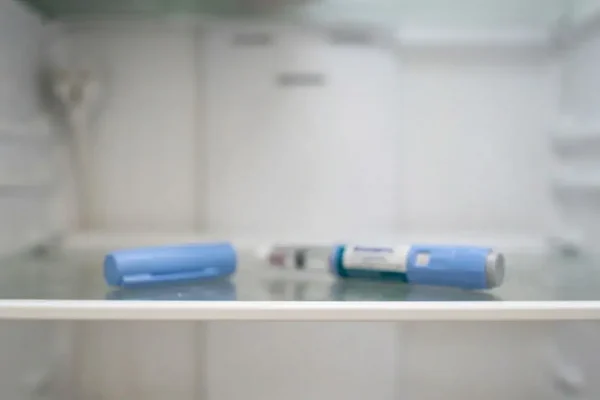
An Ozempic pen once pricked requires different storage choices than an unopened pen. This is precisely when uncertainty often arises, for example about fridge versus room temperature, a pen that has become warm or an opening date that is no longer sharp.
Good storage arrangements help keep operations predictable and avoid unnecessary risk. With a few set rules and simple controls, clarity is quickly created, even on the road.
What changes after the first use?
After the first use, the period of use of the pen starts. ‘First use’ means the moment when the pen is first pricked and a dose is administered. From that point on, the time continues to count, even if the pen is not used for a period afterwards.
The difference with an unopened pen is mainly in stability. Temperature and light can affect medicines. Therefore, there are limits for storing outside the fridge and instructions to protect the pen from light.
When in doubt, the package leaflet and the advice of pharmacists or practitioners remain leading. These are consistent with the official product information and factors that may vary from one situation to another. With that basis in mind, things become practical: where do you store the pen, and how do you avoid exceeding the period of use unnoticed?
Storage in practice: fridge, room temperature and opening date
The daily routine involves a few set storage rules. Unopened Ozempic pens are usually stored in the fridge at 2°C-8°C. After the first use, the pen may be stored back in the fridge or at room temperature, as long as the temperature remains below 30°C.
Choose a permanent place that is cool and out of direct sunlight. Leave the pen cap on when not in use to keep the pen better protected from light. Also avoid situations where the temperature rises quickly, such as in a hot car, on the dashboard, in direct sunlight or close to a heat source.
The maximum period of use after the first use is 56 days. As a practical example, if the first injection takes place on 1 March, the period of use runs until 26 April. In practice, this often goes wrong if the opening date is not fixed. Then a pen may still be used after two months, even though the official period of use has passed and the effect may be less predictable.
- Sticker or tape on the pen. Immediately note the date of the first prick.
- Calendar or phone reminder. Immediately set a reminder around day 56.
- Fixed changeover day. Link replacement to a recurring moment in the week.
Once the storage location and date registration are in place, the next step is to recognise signals that are reason not to continue using.
Considering the medical way to lose weight? Schedule a no-obligation consultation at WeightConsult. Do our own health check and contact us easily online
How to check if Ozempic is still usable (and what if it is too old)
When in doubt, a brief check on a few concrete points helps. The aim is not to ‘quality check’ yourself, but to recognise clear reasons to stop using the pen. This reduces the risk of unnecessary variation in effect.
- Within 56 days. If the opening date is known and the period is over, discard the pen. This also applies if it still contains liquid.
- Appearance of the liquid. Do not use the pen if the liquid is cloudy, discoloured or contains particles.
- Freezing. A pen that has been frozen, or probably rested against a freezing element, should not be used again.
- Storage history. If it is no longer certain whether the pen has been above 30°C, extra caution is appropriate.
Using it too long or using it after improper storage particularly risks reduced efficacy. This can mean a reduced effect on blood sugars or appetite, which can lead to faster fluctuations. In case of clear stop signals such as freezing or abnormal appearance, discarding is the safe choice. If the doubt is mainly in temperature, duration of heat exposure or an unclear opening date, consultation with pharmacy or practitioner is obvious.
If the pen has to travel more often or is exposed to varying temperatures, it pays to make the ‘transport’ part as concrete as the storage location at home.
On the road and when in doubt: what to do in heat, cooling and travelling
On the road, it's essentially about two limits: staying below 30°C while avoiding freezing. Storing in hand luggage is often preferred, as luggage compartments and cars can heat up or cool down considerably. In a hotel refrigerator, the pen can be fine, as long as it does not end up against the back wall or near a freezer compartment.
Cooling is possible, but ‘cold’ is different from direct contact with a cooling element. An insulated bag helps to dampen temperature spikes. When doing so, keep a distance from icepacks, for example with a cloth between them, so that the pen cannot freeze locally.
When in doubt, a short decision route often works most clearly:
- Has freezing been possible, for example against a cooling element, in a freezer compartment or prolonged in a car in winter? Then not using and replacing is usually the safest choice.
- Has it likely been warmer than 30°C, such as in a car in the sun, a boot on a hot day or on a windowsill in direct sunlight? If the limit may have been exceeded and it is unclear for how long, contact pharmacy or practitioner for advice.
- Is the opening date uncertain, or has the pen been kept repeatedly between hot and cold? Try to reconstruct the date via diary, prescription moment or first needle use. If doubt remains, do not continue to use the pen based on assumptions.
Those who travel regularly or have to deal with temperature changes benefit from a fixed routine: one storage place, a date label on the pen and clarity in advance about when consultation is needed. This reduces the step to choosing safely when in doubt.
Safely moving on: a logical next step in the face of uncertainty
After opening, the following applies at the core: store Ozempic below 30°C or in the fridge at 2°C-8°C, protect from light with the cap, never freeze and keep strictly 56 days from first use. If temperature, freezing or opening date is no longer certain, it is appropriate to first coordinate with pharmacy or practitioner.
In addition, when there is a need for medical assessment and guidance on safe use of GLP-1 medication, it may help to do a brief health check first and then, if appropriate, schedule a free consultation for personalised guidance within the applicable prescribing and dispensing rules.