


Medically reviewed by W. van Donselaar, doctor, BIG 79020681301, on 10 September 2026.
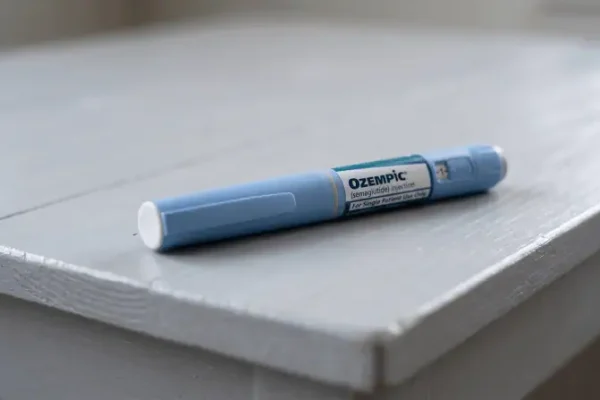
You order a weight-loss injection via a website or through an acquaintance, without the involvement of a doctor or chemist. The pen looks exactly the same as the one from your previous order. Yet this poses a risk that few people are aware of: the contents of the pen do not always match what is stated on the label.
Dutch doctors recently described, in the Nederlands Tijdschrift voor Geneeskunde (NTvG), two patients who fell into a coma after using an illegally obtained “semaglutide” pen. In both cases, it was found that the cause was not semaglutide, but insulin. Both patients were admitted to the Intensive Care Unit or the Department of Internal Medicine.
This blog explains what happened in these cases, why counterfeit slimming injections can be life-threatening, and how to avoid the risk of receiving a counterfeit product.
The short answer
Illegally obtained “semaglutide” pens sometimes contain insulin instead of semaglutide. As insulin lowers blood sugar levels regardless of the amount of glucose in the blood, this can lead to severe, life-threatening hypoglycaemia (low blood sugar), resulting in hypothermia and coma. Semaglutide itself does not cause severe hypoglycaemia in people without type 2 diabetes mellitus. If this does occur following the use of an illegally obtained pen, insulin poisoning is the most likely explanation.
Table of Contents
- Two hospital admissions caused by counterfeit disposable pens
- Why is this so dangerous? The science behind the risk
- How do counterfeit medicines end up in people’s hands?
- How can you spot potentially counterfeit medication?
- What to do if you suspect forgery
- Practical tips for avoiding counterfeit medicines
- Frequently asked questions
- Key insights
- Conclusion
Would you like to work on managing your weight in a safe, medically supervised way? Start your BMI check and find out whether a treatment programme with WeightConsult is right for you.
Two hospital admissions caused by counterfeit disposable pens
The case studies described by doctors at the Albert Schweitzer Hospital and Deventer Hospital in the NTvG provide a good insight into what can go wrong.
A 55-year-old man with no relevant medical history woke up during the night feeling nauseous, sweaty and unwell. He collapsed on his way to the toilet and was found in a comatose state by his wife. The ambulance crew recorded a blood glucose level of 1.7 mmol/l, which is well below normal. On arrival at A&E, it was found that he also had a body temperature of 32.2 °C and a low potassium level. He had been using semaglutide for six months to treat obesity, initially on prescription from a treatment clinic, and later via a cheaper online supplier. At one point, that supplier sent him a different type of pen, with an English-language label and a patient information leaflet stating that the dosage could be increased progressively.
A 47-year-old woman with no relevant medical history was also found comatose during the night, this time by her son. Her blood glucose level was even lower, at 1.1 mmol/l, with a temperature of 34.0 °C and an obstructed airway. She had been using semaglutide for a month to lose weight, obtained through an acquaintance because her GP saw no medical indication to prescribe it. She was in possession of two unauthorised pens, one labelled in German and one in Bulgarian, and had injected an unknown quantity from both the evening before her admission.
In both patients, laboratory tests using a specialised technique (LC-MS/MS) ultimately confirmed insulin intoxication. In the man, the synthetic insulin glulisine was detected. In the woman’s case, the pen with Bulgarian labelling contained a mixture of insulin glulisine, insulin aspart and human insulin, whilst the pen with German labelling was found to contain semaglutide. Both patients recovered following treatment, although the woman reported still experiencing concentration problems a month later.
Why is this so dangerous? The science behind the risk
To understand why this result was so unexpected, it helps to know the difference between semaglutide and insulin.
Semaglutide belongs to the class of GLP-1 receptor agonists, medicines derived from the body’s own hormone, GLP-1. This hormone stimulates the production of insulin in the pancreas, but only when blood sugar levels are already elevated. As soon as blood sugar levels fall, this additional stimulation ceases automatically. In addition, GLP-1 reduces feelings of hunger and slows down gastric emptying, which contributes to a feeling of fullness.
Insulin and sulphonylureas work in fundamentally different ways. They lower blood sugar levels regardless of how much glucose is present in the blood. If the dose is too high, blood sugar levels continue to fall, even to dangerously low levels, resulting in severe hypoglycaemia. This explains why insulin intoxication can lead to coma, hypothermia and impaired potassium balance, whereas semaglutide does not, on its own, cause these effects.
Clinical trials of semaglutide as monotherapy therefore show no increased risk of severe hypoglycaemia. To date, such episodes of hypoglycaemia have only been reported in people with type 2 diabetes mellitus, and particularly when semaglutide is used in combination with insulin. In a person without diabetes who develops severe hypoglycaemia following an injection purchased as “semaglutide”, adulteration with insulin is therefore the most logical explanation, rather than a reaction to the drug itself.
How do counterfeit medicines end up in people’s hands?
The number of people using GLP-1 receptor agonists in the Netherlands has risen sharply in recent years, partly due to the increased focus on these medicines for weight management. However, semaglutide is only authorised and reimbursed in the Netherlands for type 2 diabetes mellitus, subject to certain conditions. For weight loss without that indication, the medicine is not readily available through the standard healthcare system.
This combination – limited legal availability coupled with high demand – makes the market attractive to illegal sellers. They offer what they claim to be semaglutide without a prescription, without a medical assessment and often at a lower price than at an authorised treatment clinic.
Standard Dutch pharmacies check medicines in accordance with the European “Falsified Medicines Directive”. Each pack is given a unique code by the manufacturer and is sealed, and a pharmacist is obliged to check these two features before dispensing a medicine. Anyone who buys medication outside this system, such as via a website or a private seller, misses out on this check entirely. There is then no guarantee whatsoever that the contents of the pack match the label.

How can you spot potentially counterfeit medication?
There are a number of signs that may indicate a counterfeit or illegally obtained product:
- The label or package leaflet is in a different language to what you expected, or the language varies from one order to the next.
- You can keep increasing the dose yourself, without any specific medical advice on the matter.
- The treatment is considerably cheaper than that offered by a registered practitioner.
- No prescription, no medical assessment and no consultation with a doctor or pharmacist took place prior to delivery.
- The packaging lacks a verifiable, sealed unique code, or it is not possible to check whether it was inspected on delivery.
- The pen or packaging differs in appearance from previous orders obtained through an authorised supplier.
None of these signs in itself proves that a product is counterfeit, but taken together they serve as a clear warning to stop using it and seek medical advice.
What to do if you suspect forgery
If you experience symptoms such as sudden bouts of sweating, confusion, tremors, extreme tiredness or loss of consciousness after receiving a weight-loss injection, this is a medical emergency. In such cases, call 112 immediately. Severe hypoglycaemia can be life-threatening and requires immediate treatment.
Do you suspect that you have used or been offered a counterfeit or illegal medicine, without experiencing any acute symptoms? If so, you can report this to the Health and Youth Care Inspectorate (IGJ) via igj.nl. Healthcare professionals can also make such a report. In the event of confirmed counterfeits, the IGJ can issue an international “Rapid Alert”, which warns regulatory authorities in other countries. In the cases described, this helped to prevent the further distribution of the counterfeit pens.
Practical tips for avoiding counterfeit medicines
- Never buy medication via social media, online marketplaces or unknown websites. Licensed pharmacies and treatment centres are the only organisations that can guarantee a medicine’s safety features.
- Always seek a medical assessment first. A doctor will determine whether a treatment is suitable for you and what the correct dosage is, rather than you deciding this yourself based on a package leaflet or advice from a sales assistant.
- Be wary of unusually low prices. A price that is significantly lower than that charged by recognised suppliers is more often a sign of a lack of medical and quality controls than of a good deal.
- Never change your dosage yourself based on advice from a sales assistant. Only a doctor can adjust your dosage, taking your individual circumstances into account.
- Keep the packaging if you are in any doubt. If you suspect the product is counterfeit, it – together with any blood tests – may help to determine its actual contents.
Frequently asked questions
Can semaglutide itself cause low blood sugar? This is unlikely in people without type 2 diabetes mellitus. Semaglutide stimulates insulin release only when blood sugar levels are already elevated, which means that the drug does not cause severe hypoglycaemia when used as monotherapy.
How do doctors distinguish between insulin poisoning and ordinary hypoglycaemia? This involves, amongst other things, measuring insulin and C-peptide levels, and confirming these where necessary with specialist laboratory tests. Synthetic insulin does not contain C-peptide, which helps to distinguish between the two, although glucose administration and differences between test methods can complicate the interpretation.
Why do illegal sellers offer semaglutide without a prescription? In the Netherlands, semaglutide is only reimbursed and widely available for type 2 diabetes mellitus. The high demand for the drug for weight loss, combined with its limited legal availability, has fuelled an illegal market.
Are all online sellers of weight-loss medication untrustworthy? Not every online service is unreliable, but a reputable provider will always carry out a medical assessment beforehand, use a registered pharmacy and supply verifiable, tamper-proof packaging. If any of these elements are missing, it is advisable to exercise caution.
What should I do if I think I have taken a counterfeit medicine? In the event of acute symptoms such as loss of consciousness, confusion or profuse sweating, call 112 immediately. If there are no acute symptoms, you can report a suspected case of counterfeiting to the Health and Youth Care Inspectorate via igj.nl.
How does WeightConsult ensure that this risk is avoided? At WeightConsult, a doctor assesses every application before any treatment advice is given, and any medication, where this forms part of a treatment programme, is dispensed via recognised, regulated channels. This way, you know exactly what you are receiving and under what medical supervision.
Key insights
- Counterfeit “semaglutide” pens from the black market may in fact contain insulin, which could lead to life-threatening hypoglycaemia.
- Semaglutide as monotherapy does not cause severe hypoglycaemia in people without type 2 diabetes mellitus; this distinguishes an adverse reaction from a common side effect.
- The limited legal availability of semaglutide for weight loss, coupled with high demand, has contributed to the emergence of an illegal market outside the pharmacy and prescription system.
- Signs such as a label in a foreign language, a missing prescription or an unusually low price may indicate that a product is counterfeit.
- Any suspicion of counterfeiting can be reported to the Health and Youth Care Inspectorate, which can limit further distribution via an international “Rapid Alert”.
Conclusion
The case studies published in the *Nederlands Tijdschrift voor Geneeskunde* show that purchasing slimming medication outside the mainstream healthcare system is not merely a matter of financial risk. If a purported semaglutide pen actually contains insulin, this can lead to coma and a prolonged hospital stay. Semaglutide itself does not cause such severe hypoglycaemia, which makes this type of counterfeit product particularly treacherous: the symptoms do not appear to be associated with the drug, and that is precisely the sign that one should be on their guard. A prior medical assessment and obtaining medication through a recognised, regulated channel remain the best protection against this risk.
Would you like to work on managing your weight in a safe, medically supervised way? Start your BMI check and find out whether a treatment programme with WeightConsult is right for you.
Key points blog
What is the risk associated with illegally purchased semaglutide pens?
What is the risk associated with illegally purchased semaglutide pens?
Instead of semaglutide, they may contain insulin. This could cause severe, life-threatening hypoglycaemia, possibly leading to a coma.
How can you tell whether hypoglycaemia is caused by semaglutide itself or by a counterfeit product?
How can you tell whether hypoglycaemia is caused by semaglutide itself or by a counterfeit product?
Semaglutide as monotherapy does not cause severe hypoglycaemia in people without type 2 diabetes mellitus. If this does occur, contamination with insulin is the most likely explanation.
What can you do to avoid this risk?
What can you do to avoid this risk?
Never buy medication from anywhere other than a registered pharmacy or treatment centre, and always undergo a medical assessment before starting treatment with a GLP-1 medication.
Sources
- Stammers J, Hofste op Bruinink D, Karel PGA, van der Hoeven CJ, Schol-Gelok S, Stam-Slob MC. Insulin poisoning caused by counterfeit semaglutide. Dutch Journal of Medicine. 2026;170:D9116.
- Healthcare and Youth Inspectorate (IGJ). Illegal trade in medicines.
- Healthcare and Youth Inspectorate (IGJ). Safety features of medicinal products (FMD).
- Healthcare and Youth Inspectorate (IGJ). Contact / Report an issue.
- Foundation for Key Pharmaceutical Indicators (SFK). Rise in the use of GLP-1 agonists, 2026.